
The order you walk Josefov matters more than the ticket you buy
Six sites, four hundred metres, and one sequence that turns a museum crawl into a story.
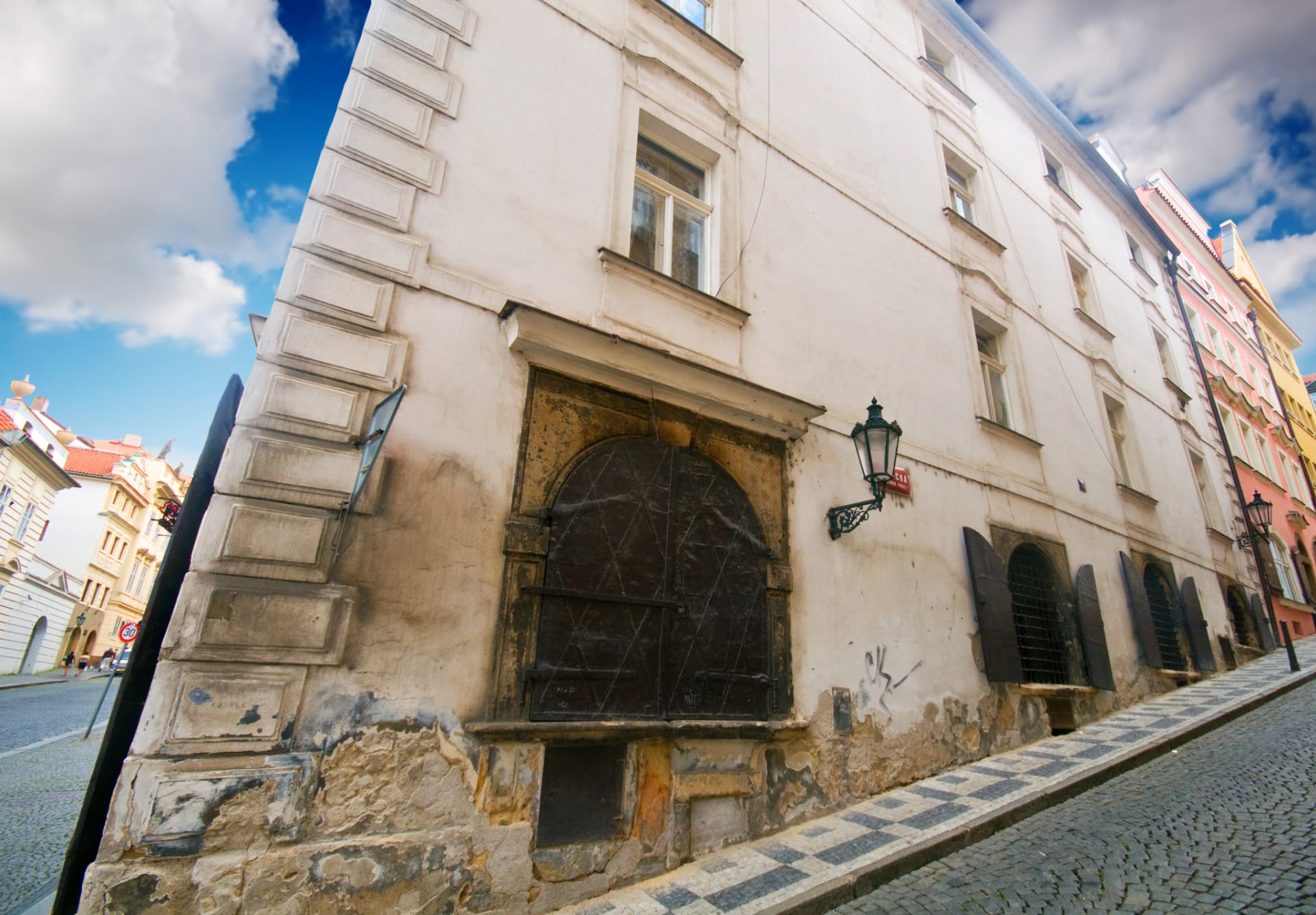
Josefov is small. You can cross the whole quarter in the time it takes to drink a coffee, and on a July afternoon you will cross it several times, because the queue for one site sends you to another and the map on the back of the ticket is not really a map. That is how most people see it: in fragments, out of order, in whatever sequence the crowds allow.
The quarter does have a natural order, though. Not chronological — the buildings are jumbled across five centuries — but narrative. Walk it in that order and the six sites stop being six sites. They become one place that had a beginning, a long middle, and a rupture.
Start at the Maisel Synagogue, not the Old-New
Everyone wants the Old-New Synagogue first. It is the famous one, the oldest working synagogue in Europe, the one with the Golem in the attic. Resist for forty minutes. The Maisel Synagogue holds the exhibition on Jewish life in the Bohemian lands from the tenth century to emancipation, and without that groundwork the Gothic hall down the street is just an old room with good acoustics.
What you want from Maisel is one idea: that Jews were in Bohemia before the Přemyslid dynasty finished consolidating the country, and that everything afterwards — the privileges, the expulsions, the taxes, the returns — happened to a community that was already at home.
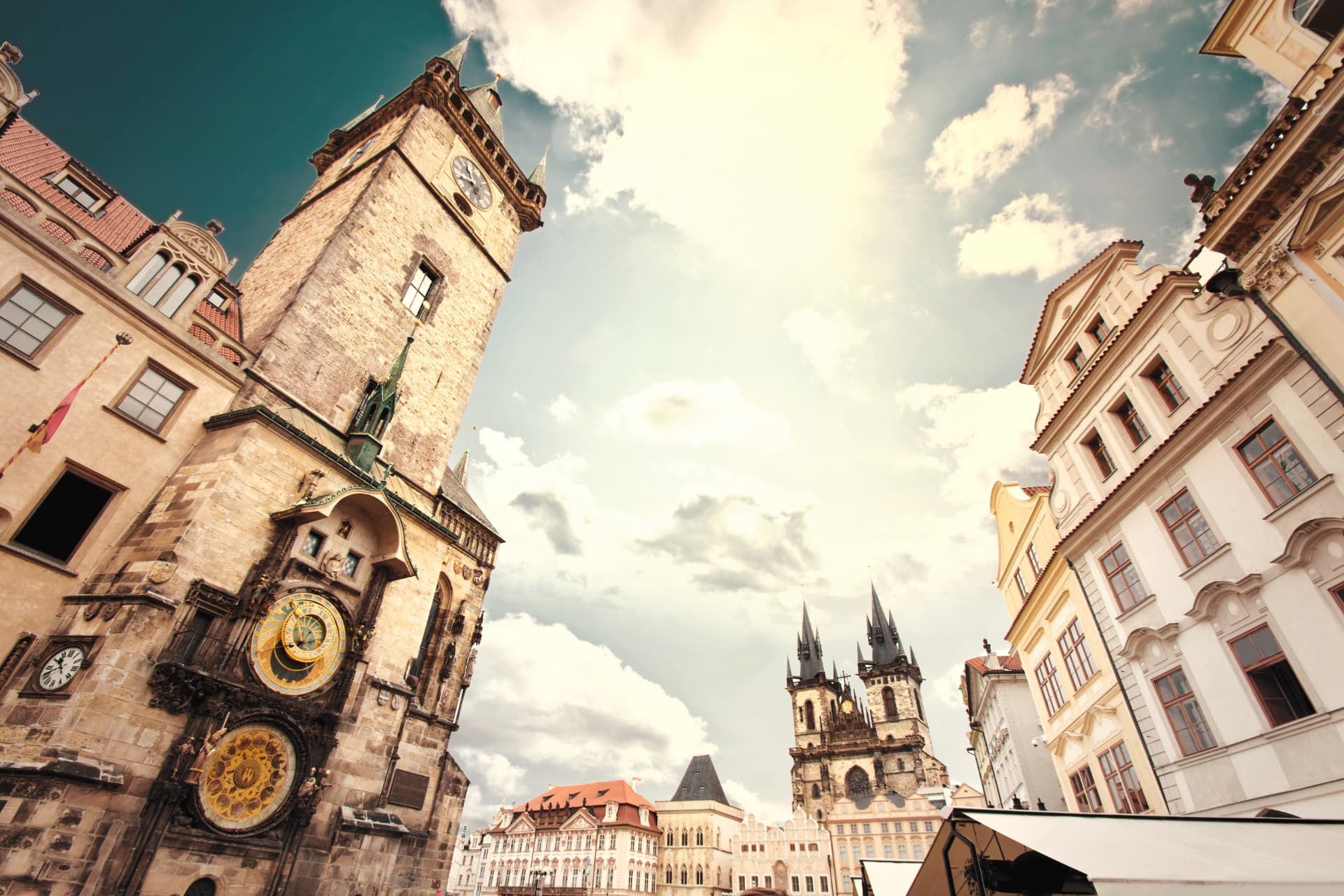
Then the Old-New Synagogue, standing outside first
Go out to Maiselova and look at the building from the street before you go in. It sits low, a metre or so below the current pavement, because the ground around it rose over seven centuries of river flooding and rebuilding while the synagogue stayed put. The brick gable was a fourteenth-century addition. The two naves inside are unusual for a synagogue and normal for a Cistercian chapter house, which tells you who the stonemasons were.
Inside, find the seat with the Star of David and the chain — Rabbi Löw's seat, unoccupied since 1609 by tradition. If a service is running you should not be in there with a camera. If it is not, sit for a minute in the back and notice how little natural light there is. That is not atmosphere. That is a medieval building permit.
The cemetery in the middle, never at the end
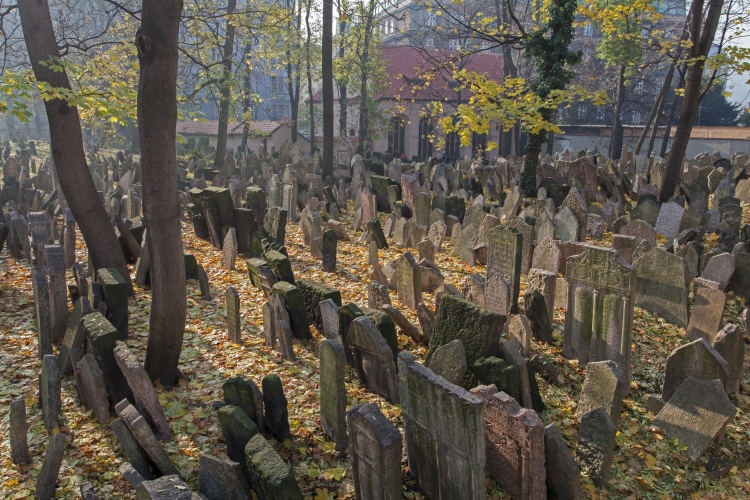
People save the Old Jewish Cemetery for last and then walk through it in nine minutes with tired feet. It deserves the middle of your morning, when you still have attention left. Twelve thousand visible stones, an estimated hundred thousand burials, layered up to twelve deep because the community was forbidden to expand the ground and Jewish law forbids removing the dead.
That single sentence — no land, no exhumation, so bury upward — explains the whole strange topography. The hills are not landscaping. They are people.
Pinkas last, always
The Pinkas Synagogue carries the names of roughly 78,000 Jews from Bohemia and Moravia murdered in the Shoah, hand-lettered on the walls, town by town, family by family. Upstairs are the drawings children made in Terezín.
If you go in there first, everything after it is noise. If you go in last, the four hundred years you just walked through are standing behind you while you read, and the room does what it was designed to do. I have never once walked a family out of Pinkas and had them want to keep talking. That is the correct reaction, and it is why the route ends there.
Practical: the Jewish Museum sites close on Saturdays and Jewish holidays. The Old-New Synagogue is a separate ticket from the museum circuit — buy both if you want everything.
How long it actually takes
- Two hours if you move: Maisel, Old-New from outside and in, cemetery, Pinkas.
- Three hours is the honest number with the Spanish and Klausen synagogues added.
- Half a day if you also want the Jubilee Synagogue in the New Town, which is a ten-minute walk east and worth it.
- Book the first entry slot of the day between May and September. By eleven the cemetery path is single file.
None of this requires a guide. It requires a sequence. But if you want the version where somebody tells you whose grave you are standing beside and why the community kept the ban on that particular street until 1848, that is the job.
Questions we get asked
- What is the best order to visit Prague's Jewish Quarter?
- Maisel Synagogue first for historical context, then the Old-New Synagogue, then the Old Jewish Cemetery, and finish at the Pinkas Synagogue memorial. The Spanish and Klausen synagogues fit after the cemetery if you have time.
- How long does the Jewish Quarter in Prague take?
- Two hours covers the core four sites at a brisk pace. Three hours is realistic with all six museum buildings, and half a day if you add the Jubilee Synagogue in the New Town.
- Is the Jewish Quarter open on Saturday?
- No. The Jewish Museum sites and the Old-New Synagogue close on Shabbat and on Jewish holidays. Plan Josefov for Sunday through Friday.
Want this walked with you?
Tell us your dates, languages and what you care about. We match you with a licensed Prague guide who actually fits — or we tell you we cannot.