
Kafka's Prague is a Jewish Prague, and the tourist trail hides it
Skip the museum with the peeing statues. Walk the four hundred metres he actually lived in.
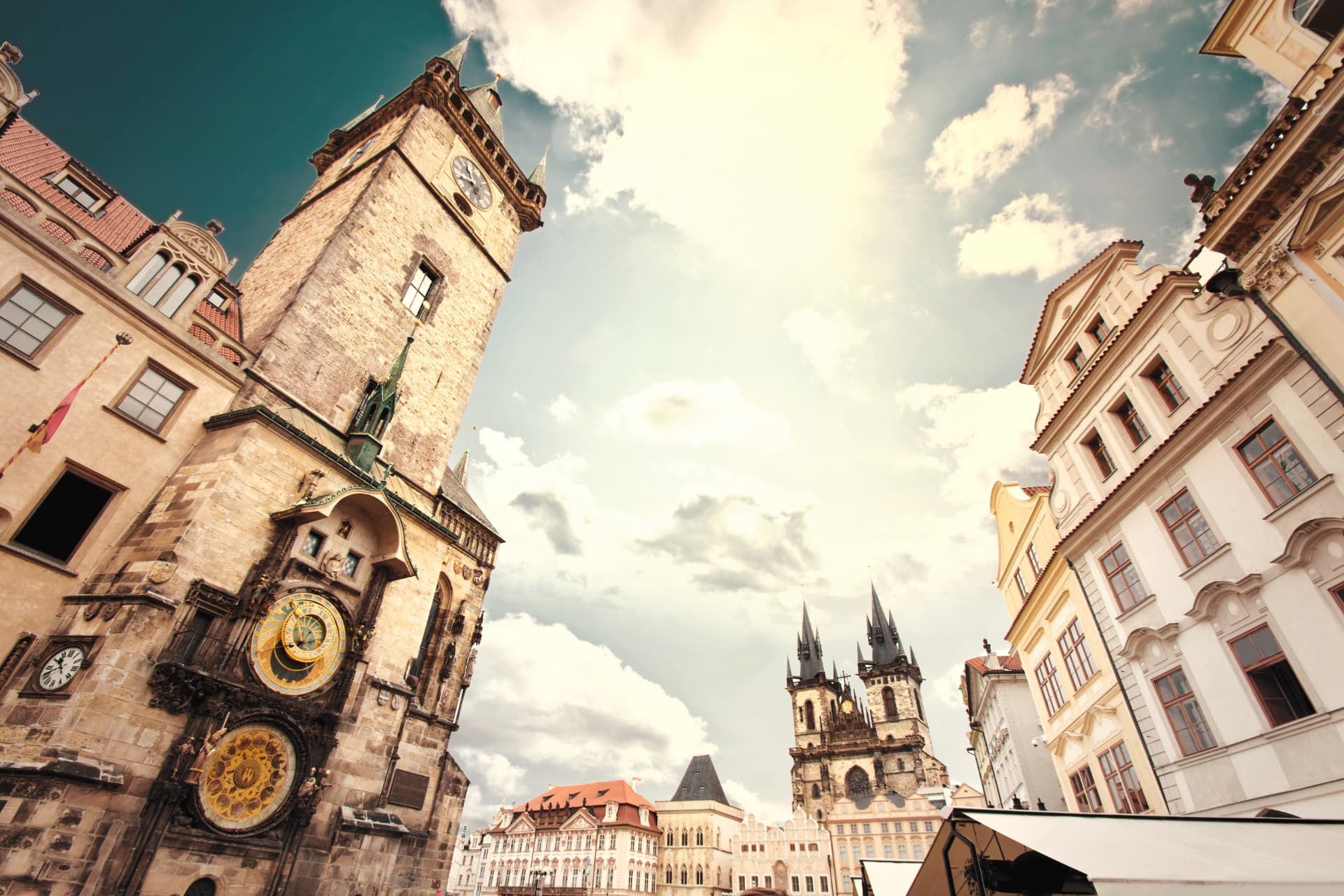
There is a Kafka industry in Prague and most of it is merchandise. T-shirts, a rotating metal head, a museum with a widely photographed water feature. Very little of it engages with the fact that Kafka was a Jewish boy from a German-speaking, Czech-assimilating merchant family, growing up on the rim of a ghetto that was being knocked down around him.
He was born into a demolition
Kafka was born in 1883 at the edge of Josefov. From 1893 the city carried out the asanace — the sanitation clearance — and flattened most of the old Jewish quarter, replacing crooked lanes and tenements with wide Art Nouveau boulevards like Pařížská. Six synagogues, the town hall and the cemetery were spared. Everything else went.
He watched a neighbourhood become an idea. He wrote later, in a much-quoted line, that the dark corners and unlit alleys were still alive inside him. The person who wrote The Trial grew up in a place where the streets stopped matching the map.
The addresses, in walking order
- U Radnice, by the corner of Maiselova — the birth house site, marked with a bust.
- Old Town Square, Dům U Minuty — the family lived here in the 1890s; his sisters were born in these rooms and he walked to school from this door.
- Kinský Palace on the square — his father's fancy-goods shop occupied the ground floor, and Kafka attended the German gymnasium in the same building. Ten metres of commute, a lifetime of pressure.
- Golden Lane at the Castle, no. 22 — his sister Ottla rented it in 1916 and he wrote there through a winter.
- The New Jewish Cemetery in Žižkov — the family grave, with Franz, Hermann and Julie. Metro to Želivského, turn right at the gate, and there is a plaque nearby for his three sisters, all murdered in the Shoah.
The Yiddish theatre changed him
In 1911 a travelling Yiddish troupe from Lemberg played at the Café Savoy on Vězeňská Street, ten minutes from his door. Kafka went repeatedly, befriended the actor Yitzchak Löwy, and filled his diaries with them. He started reading Jewish history, went to lectures on Hasidism, later studied Hebrew, and in the last years wrote to Dora Diamant about opening a restaurant in Tel Aviv — she would cook, he would wait tables.
The standard image is Kafka the alienated modernist, Jewish only by accident. The diaries do not support it. He went looking, deliberately, and he did it in these streets.
What happened to the family
Kafka died of tuberculosis in 1924, aged forty. His three sisters — Elli, Valli and Ottla — were deported. Ottla volunteered to accompany a transport of children from Terezín to Auschwitz in October 1943 and was murdered there. Her name is on the wall of the Pinkas Synagogue with the others. People rarely make that connection while standing in the room, and it changes both places.
Doing this walk well
Two hours on foot, Old Town Square to Josefov, plus a separate half-hour trip out to Žižkov for the grave. Read one thing before you come — Letter to His Father, forty pages, written in 1919 and never delivered — and the shopfront under the family flat will stop being a shopfront.
Questions we get asked
- Was Kafka Jewish?
- Yes. Franz Kafka was born into a Jewish family in Prague in 1883, grew up beside the Jewish Quarter, became deeply interested in Yiddish theatre and Jewish learning in his twenties, studied Hebrew and is buried in the New Jewish Cemetery in Žižkov.
- Where is Kafka buried in Prague?
- In the New Jewish Cemetery in Žižkov, in the family grave with his parents Hermann and Julie. The nearest metro station is Želivského, and a memorial plaque to his three sisters stands nearby.
- What Kafka sites are worth visiting in Prague?
- The birth house site near Maiselova, Dům U Minuty and the Kinský Palace on Old Town Square, Golden Lane no. 22 at the Castle, and the family grave in Žižkov. A Jewish Quarter walk covers most of them on foot.
Want this walked with you?
Tell us your dates, languages and what you care about. We match you with a licensed Prague guide who actually fits — or we tell you we cannot.